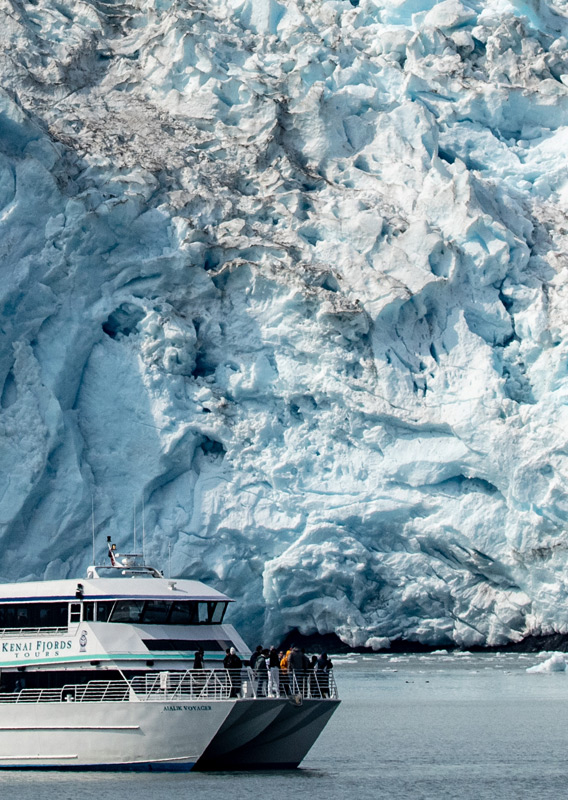
Alaska is home to an estimated 100,000 glaciers, covering roughly five percent of the state. These immense masses of snow and ice have been shaping the landscape for thousands of years, carving the valleys, mountains and fjords we explore today.
Many glaciers date back to the last ice age, but they aren't frozen in time. Glaciers are constantly moving and changing. Many are retreating as global temperatures rise, affecting ecosystems, water resources and coastal communities around the world.
At Pursuit, preservation starts with education — giving visitors the chance to experience Alaska's glaciers up close while encouraging connection to place, stewardship and a lighter footprint.
About a quarter of Alaska's glaciers are found within national parks. From towering tidewater glaciers to massive icefields, each type has its own character. Here's how to tell them apart — and where to find them in Alaska.
What is it: Ice fields are large bodies of interconnected glacial ice that form in mountain basins where snowfall accumulates year after year. Some stretch for hundreds of miles — the Harding Icefield in Kenai Fjords National Park, for example, covers about 700 square miles (roughly one-and-a-half times the size of Los Angeles).
From these frozen reservoirs, ice flows into smaller outlet glaciers that carve through surrounding valleys. Mountain ridges guide the movement of the ice, and in some places only the tallest peaks rise above it, forming rocky islands known as nunataks.
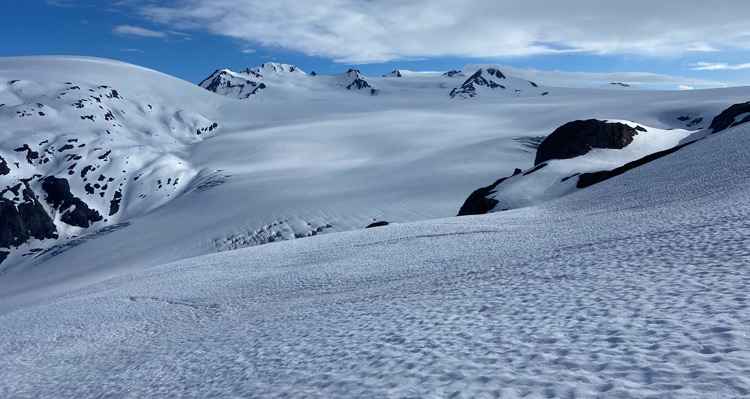
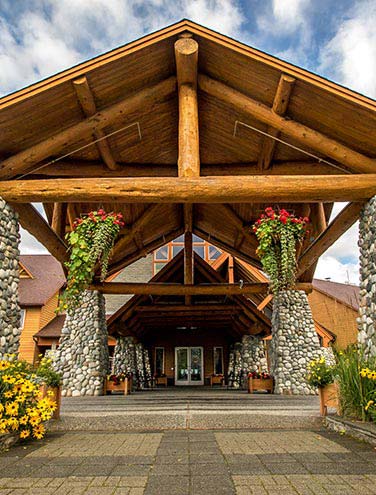
Where to see them: Near Seward, the 8.2-mile Harding Icefield Trail climbs more than 1,000 feet to offer sweeping views of the ice field. Start the trek from the Exit Glacier area. Afterwards, stop by Resurrection Roadhouse for a well-earned meal of comfort-driven classics.
What is it: Alpine glaciers form in rugged mountain landscapes throughout many of Alaska's national parks. Some develop in bowl-shaped basins called cirques, where snow and ice collect along steep slopes. These glaciers often cling to high mountain terrain and may cascade over cliffs in dramatic icefalls.
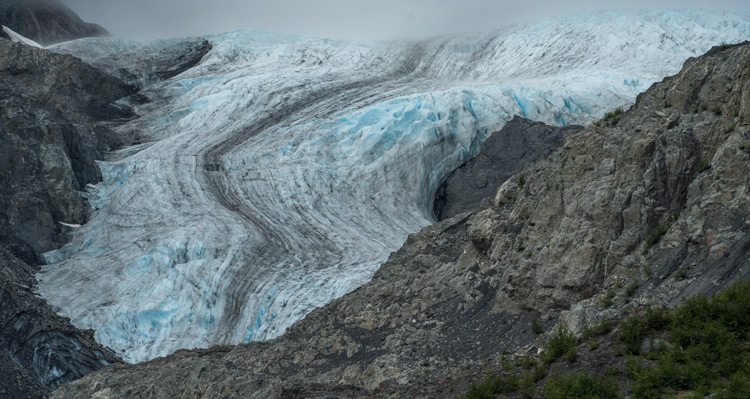
Where to find them: Exit Glacier, near the tucked-away Seward Windsong Lodge, is Kenai Fjords National Park’s most accessible glacier. Visitors can hike the trail system or join a ranger-led walk for close-up views.
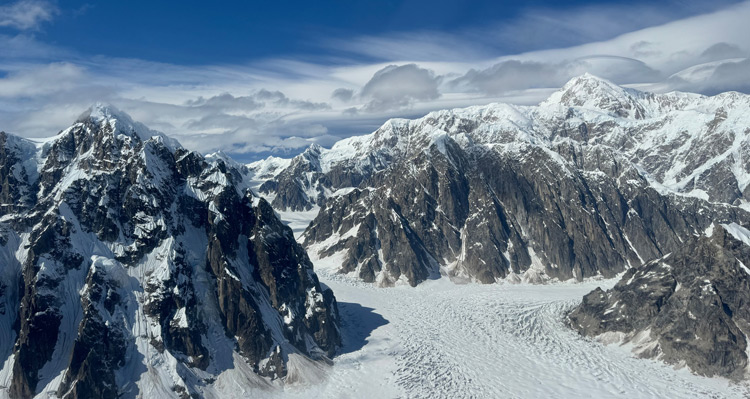
Where to find them: Ruth Glacier, beneath the peak of Denali (also called Mount McKinley) in Denali National Park and Preserve, is best viewed on a flightseeing tour from Talkeetna. Talkeetna Alaskan Lodge offers a comfortable base and warm Alaska hospitality for before or after your flight.
BONUS: Looking to spot a piedmont glacier? Bear Glacier is visible from any Kenai Fjords Tours cruise.
What is it: Tidewater glaciers form on land but flow all the way to the ocean, where they end up in steep coastal fjords. As the ice reaches the water's edge, large chunks can break off — a process known as calving — creating floating icebergs. Freshwater glaciers behave in a similar way but terminate in lakes or other inland waters and typically calve less frequently.
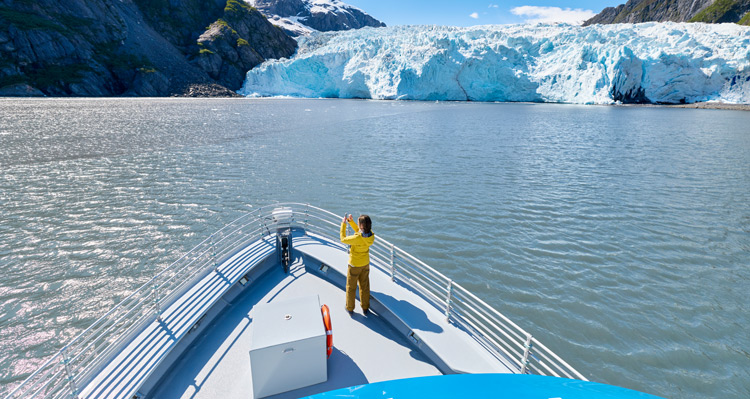
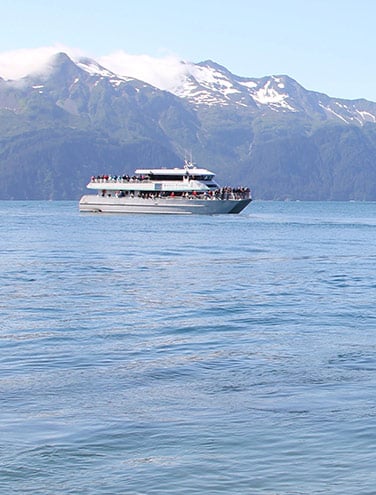
Where to see them: From Seward, Kenai Fjords Tours' Captain's Choice Tour travels into the wild beauty of Kenai Fjords National Park, getting you up close to either Holgate or Aialik Glacier.
What is it: Rock glaciers are slow-moving masses of ice covered by layers of rock and debris. This rocky surface insulates the ice below, allowing them to persist in places where temperatures may be too warm for larger alpine glaciers. Unlike traditional glaciers, much of the ice is hidden beneath the surface.
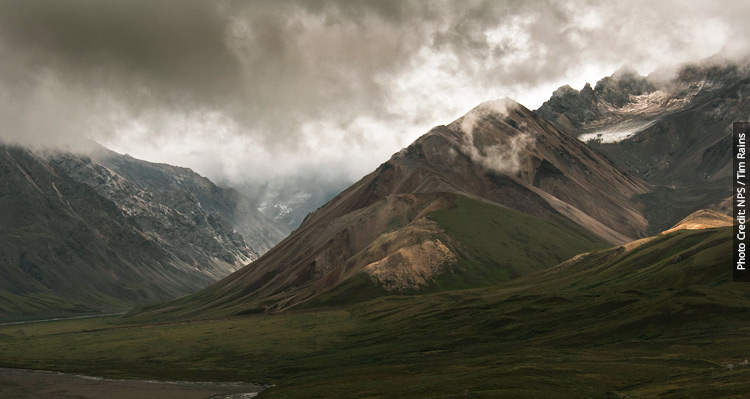
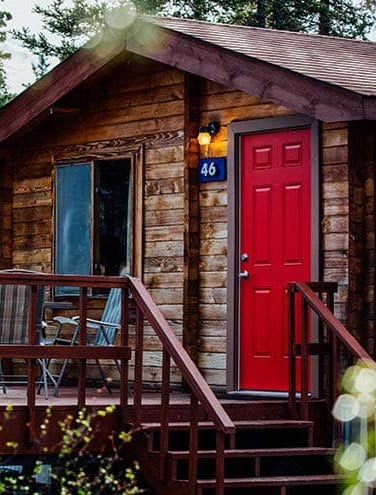
Where to see them: In Denali National Park and Preserve, rock glaciers can be spotted near Polychrome Pass during a bus tour along the Denali Park Road. Travelers exploring the area can stay nearby at Denali Cabins — a charming basecamp for any Denali adventure.
NOTE: Polychrome Pass vehicle access is limited to Mile 43 of the Denali Park Road due to the Pretty Rocks Landslide. Full road access is expected to return in summer 2027.
With so many ways to experience them, Alaska's glaciers offer endless opportunities for discovery. Plan your visit and take the first steps towards your very own glacial adventure.

About the Author
Based in Anchorage, Alaska, Andrea Burtzel is an outdoor advocate who loves inspiring others to get outside through activities like rock climbing, mountain biking and trail running. When she’s not out exploring, she’s working toward a degree in Journalism and Public Communications at the University of Alaska Anchorage. Follow her on Instagram at @andreainalaska or connect with her professionally at andreaburtzel.com.
Insider tips, inspiration and deals — delivered straight to your inbox.